Pentimento
My mother was known for her gorgeous handwriting. It was round and loopy, and each letter was beautifully formed. I’ve never seen hand-drawn script that was so easy and pleasant to read—each word proceeded across the page on a perfectly straight line even when the paper was unlined! Her handwriting is the most precious echo I have of my mother’s presence. I trace it on recipe cards and little notes that I have saved, and it makes me think of the legacy of marks that I wish to leave to my children.
Over the past year, my painting has become much freer. I am allowing the spontaneity of my initial impulses to remain alive on the canvas—my “hand” is now visible in the work. I’ve written before that I think of this as a sort of pentimento. We usually understand pentimento as evidence that an artist has changed their mind as seen by the marks that show through the final work. I see it more as a way of making the process of painting the message. Rather than evidence of doubt, I intend it to be an ongoing signature that marks my presence, however temporary. I hope my children will be able to connect with me after I’m gone by tracing the conversations I have with myself on the canvas today.
I started thinking about pentimento, the marks that remain, as I was researching women painters whose careers didn’t gain momentum until after they had finished lives as mothers/wives/workers. I was looking at Rose Wylie (b. 1934) and Lois Dodd (b. 1927).
Wylie went to art school in the 1950s but put her career on hold for marriage and children. She went back for her MA in 1979 (the year I was a freshman at RISD) and got her first big break with her series, Room Project (2003-04), which was chosen for East International at Norwich Gallery. It garnered career-boosting attention from the art world that continues today. She was seventy-years-old.
Lois Dodd graduated from Cooper Union in 1948 and returned from studying in Rome in 1950. She married and had a son, but unlike Wylie (and me) she did not put her artistic career on pause. After her divorce from sculptor William King, she raised her son in a home on the Lower East Side of New York with two other single women artists and their children. Dodd began showing her work early, though sustained art world attention didn’t come until she was much older. She had her first major solo exhibition in 2012 after over sixty years of consistent painting.
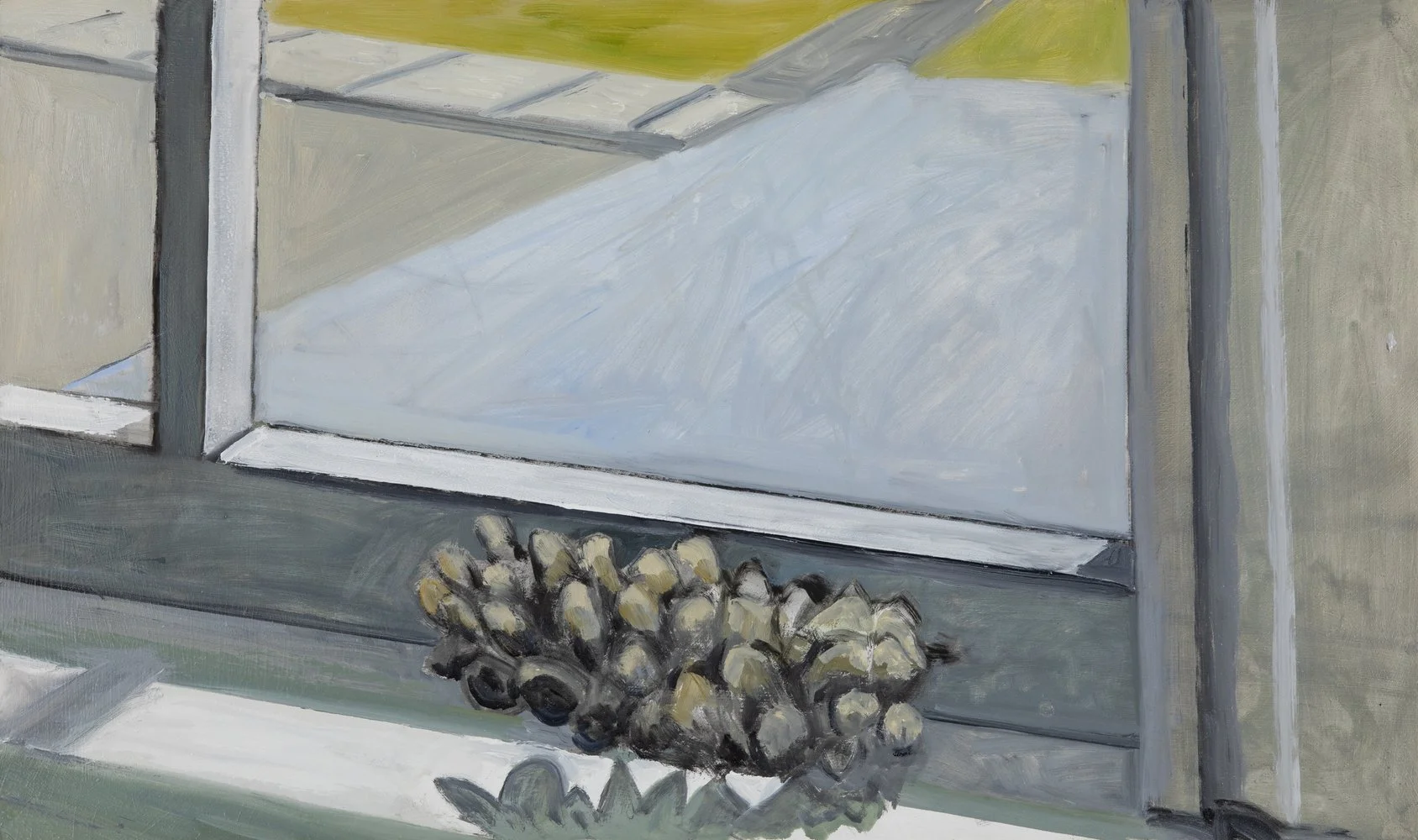
Lois Dodd, White Pinecone on Windowsill, 2025, il on Masonite, 12 × 20 inches
As for career trajectory, I have more in common with Rose Wylie than Lois Dodd, but it is to Dodd whom I turn as a kindred spirit; her paintings speak to me. She filters the world down to its essentials: this color, that shape simplified, examined, quiet. And because Dodd paints in Maine (not far from my home) I “know” her subject matter like an old friend. I have a great reverence and appreciation for formal artistic precepts. I respond to color, volume, and contrast. I’m a traditionalist who seeks to challenge tradition from within, but I still get great satisfaction from working in a tight artistic context: limited palette, simplified shapes, high contrast, the picture plane as an arena for experimentation. For me, a tightened context yields a greater impact.
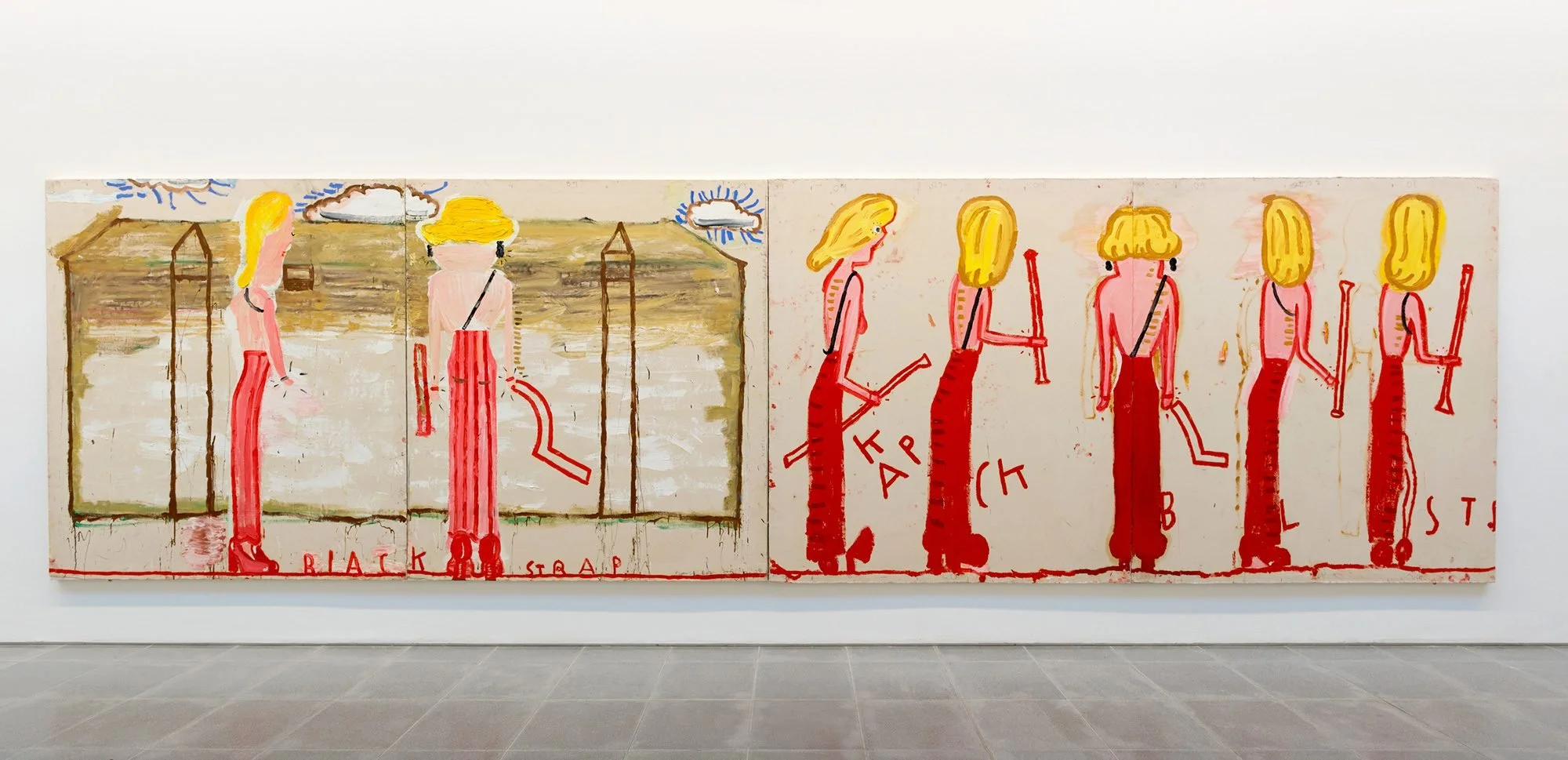
Rose Wylie, Installation view, 'Quack Quack' Serpentine North Gallery, London (30 November 2017 – 11 February 2018) Photograph © 2017 Mike Din
Rose Wylie’s work commands attention. It is raw. Her wild juxtapositions and ironic satire are intriguing, but I feel bludgeoned by their flat, childlike insistence. She draws from her imagination, memories, and current events and paints words and images on large pieces of unprimed canvas or paper that she works and reworks so there is actual pentimento present. Her marks reveal her process, which I find quite exciting. However, I am repelled by her work. While I have the greatest respect for Rose Wylie and appreciate what she has accomplished, I am already living with the exhaustion of the cultural noise she draws from. Her work offers me no refuge or transformation. Rather, it amplifies the signal I am trying to escape.
Neither Lois Dodd nor Rose Wylie ever stopped making pictures. Dodd maintained a career a little earlier. Wylie put that part of her life on pause while she attended to life’s other demands. Yet both have been painting consistently for several years as older women, and both will leave traces of their passage on this earth that will speak not only to strangers like me, but possibly more profoundly to the children and grandchildren they will leave behind. Those children might look at the work and think, this is what my mother thought. This is what she saw. This is what moved her so that she felt compelled to make a record of it. This is who my mother was as an artist and as a person.
This pentimento is what I hope to leave my own children and grandchildren. I may never sell a painting, but hopefully my children will be able to connect with me after I’m gone by tracing the conversations I have with myself on the canvas. It is who I am.
https://www.artsy.net/article/artsy-editorial-91-rose-wylie-breaking-rules-joyful-paintings
https://www.alexandregallery.com/artists-work/lois-dodd#tab:slideshow;tab-1:thumbnails
https://en.wikipedia.org/wiki/Rose_Wylie
https://en.wikipedia.org/wiki/Lois_Dodd
https://hyperallergic.com/the-sacrifices-of-the-single-mother-artist/
https://brooklynrail.org/2023/10/art/Rose-Wylie-with-Suzanne-Hudson/
https://www.artandobject.com/news/how-lois-dodds-paintings-frame-everyday-life#:~:text=Although she frequently exhibited her,all based on direct observation
https://www.serpentinegalleries.org/whats-on/rose-wylie-quack-quack/
https://www.alexandregallery.com/artists-work/lois-dodd#tab:slideshow;tab-1:thumbnails